How Much Internet Speed Do You Need for Streaming and Gaming?
Per activity requirements
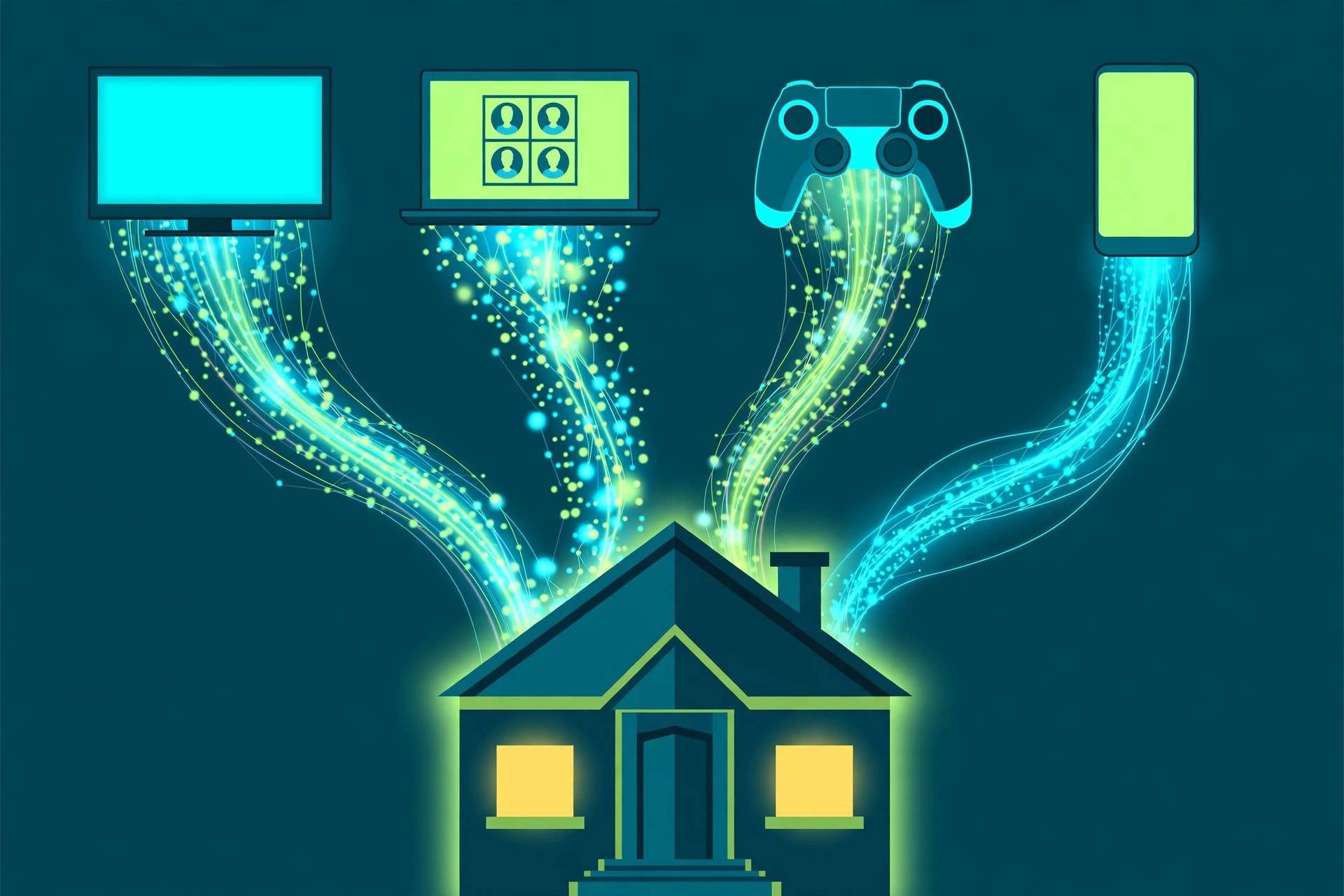
One stream of high definition video needs about 5 Mbps of clean, steady throughput; 4K needs about 15 to 25. A video call needs 1.5 to 4 Mbps in each direction. Online gaming needs very little bandwidth, often under 1 Mbps, but demands low latency, the responsiveness covered in the companion guide. Music, browsing and messaging are rounding errors beside video. The pattern to notice is that headline speeds of hundreds of megabits are not about any single activity; they are about concurrency. A household of four streaming, calling and downloading at once can genuinely use 100 Mbps in the evening peak, while a single person in a flat is well served by a quarter of that.
Steady beats fast
Streaming and calls care about consistency more than peaks. A line that averages 50 Mbps but dips to 2 Mbps every few minutes will buffer and freeze, while a rock steady 20 Mbps line plays the same film flawlessly. Wi-Fi is the usual source of dips, which is why the same plan performs differently room by room, and why testing at the sofa, at the busy hour, tells you more than the number on the contract. The download calculator here gives the clean maths from a speed you supply; supply the speed you actually measure at the worst hour and the estimate becomes a plan instead of a hope. Providers also shape the evening peak, when the whole street is streaming at once.
The upload and latency catches
Two figures hide under the advertised download speed. Upload, often a tenth of it, decides video call quality, cloud backup sanity and how fast you can send work. Latency, the delay before data starts moving, decides how responsive everything feels, and no bandwidth upgrade fixes a high latency satellite or congested line. When a connection feels slow despite a big speed figure, one of these two is usually the culprit, and both are measurable in seconds with any speed test. Shop for the trio, not the headline: download for the household's concurrency, upload for the creators and callers, latency for the gamers and anyone who hates waiting for pages to start. A last test before upgrading a plan: borrow the evening peak. Run your household's worst hour deliberately, every screen on, a call running, a download in the background, and watch what breaks. If nothing breaks, your plan is not your problem, whatever its headline. If things break, note which: buffering points to download concurrency, frozen outgoing video points to upload, and rubber banding in games points to latency. Each diagnosis has a different cure, and only one of them is a bigger plan.