Private vs Public IP Addresses: The Two Internets
The three private ranges
Three blocks of IPv4 space are set aside for private use and are never routed on the public internet: 10.0.0.0/8 with about 16.7 million addresses, 172.16.0.0/12 with about a million, and 192.168.0.0/16 with 65,536. Any organisation may use them internally without asking anyone, and millions do, which means your 192.168.1.5 laptop address exists in countless other homes at the same time without conflict, because those networks never meet. Routers know not to forward private addressed traffic to the internet. When you type an address into the subnet calculator on this site, it labels private ranges so you can see at once whether an address is an inside or outside one.
NAT: the translator at the border
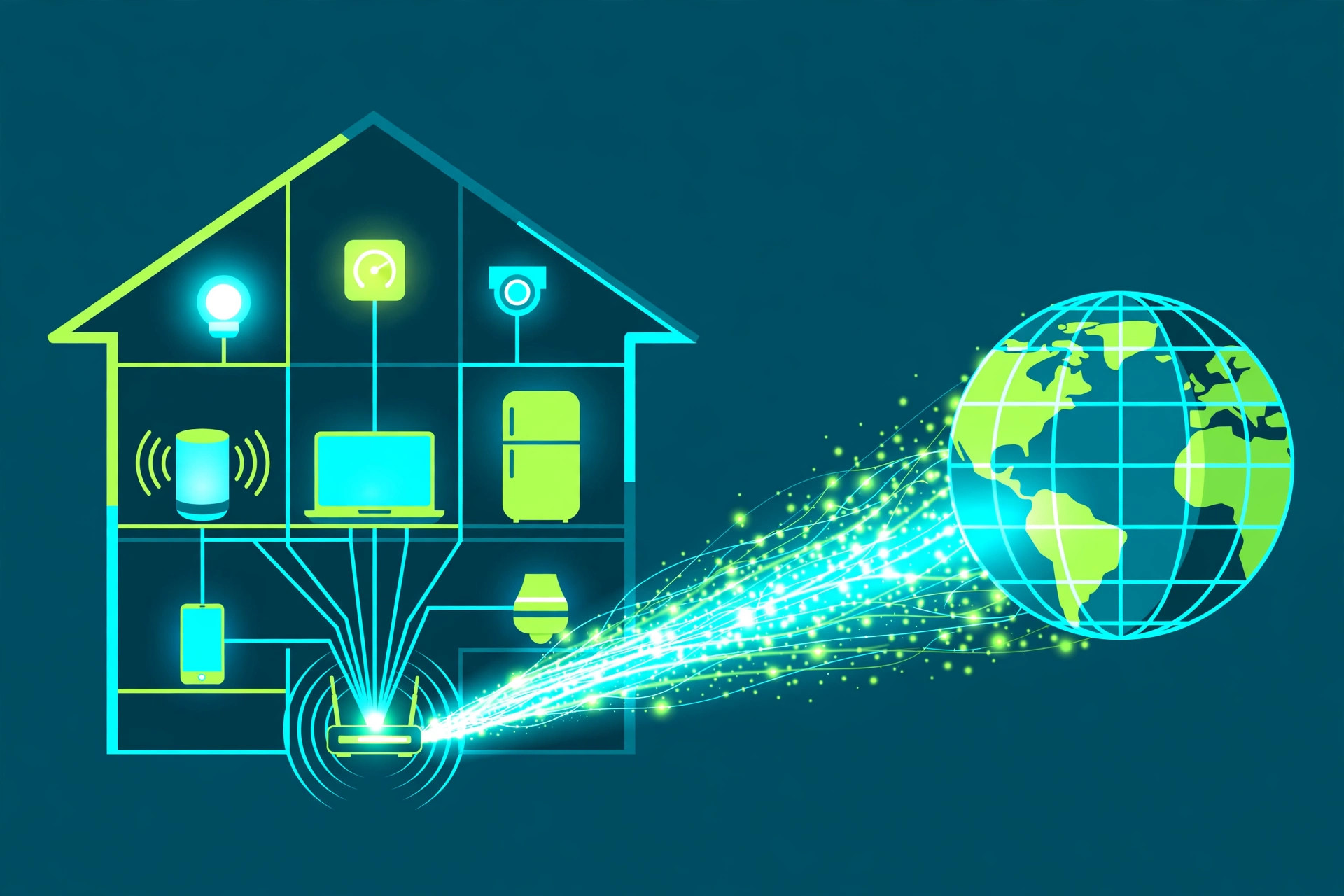
If private addresses cannot travel the internet, how does your laptop reach websites? The router performs Network Address Translation. It swaps your private source address for its own public address, notes the swap in a table, and reverses it for the replies. One public address can serve a whole household or office this way, with the table keeping thousands of conversations separate, partly by using different port numbers. NAT was adopted as an emergency measure against address exhaustion and became permanent plumbing. It has a side effect people mistake for a security feature: unsolicited traffic from the internet has no entry in the table and is dropped, which hides internal devices by default.
Telling which address you actually have
Your device settings show its private address, the one the router assigned. Your public address is what websites see, and you can find it by asking a site that reports it. The two differ whenever NAT is in play, which is nearly always at home. Some connections add a second layer, carrier grade NAT, where the provider also translates, putting your router's public looking address inside another private range such as 100.64.0.0/10; that is why port forwarding sometimes refuses to work for gamers and camera owners. Knowing which layer you are stuck behind turns a frustrating mystery into a specific question for your provider. There is one more consequence of private addressing that shows up in daily life: services that block or flag you based on IP reputation are judging your public address, which you may share, through carrier grade NAT, with hundreds of strangers. A captcha storm or a blocked forum account is sometimes their behaviour, not yours. It is also why your public address can change when the router restarts. None of this is fixable from your chair, but knowing the layers stops you blaming the wrong one.