What Is TDP? The Wattage Number on Every Chip
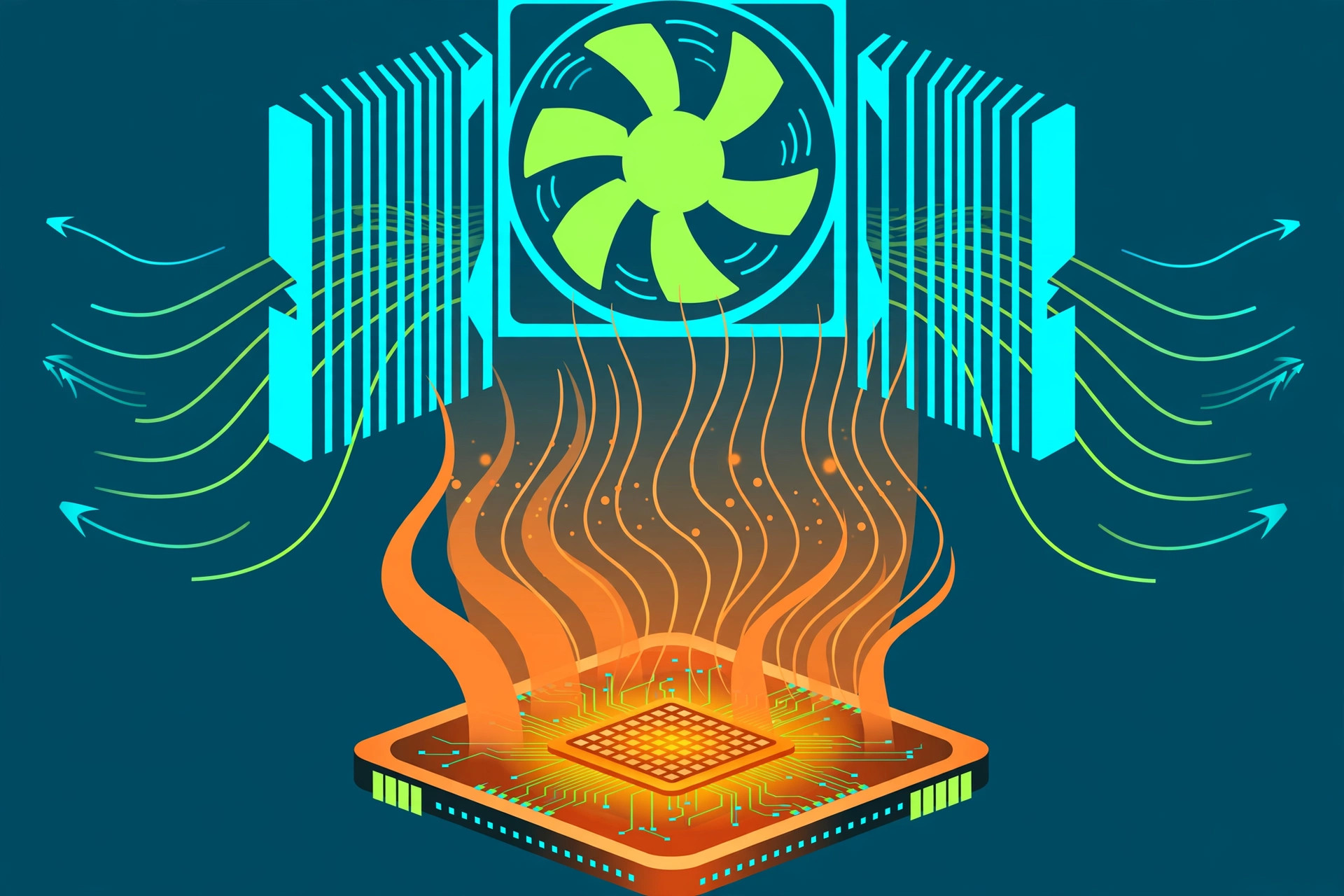
A thermal number wearing a power costume
TDP, thermal design power, is officially a cooling specification: the heat, in watts, that a cooling system must be able to remove continuously for the chip to maintain its rated performance. Because heat and electrical power are nearly the same thing inside a chip, TDP became the industry's shorthand for power draw, and the PSU calculator here uses it that way. But the shorthand is loose. Two processors with identical TDPs can draw noticeably different power in real work, because TDP is a class the maker assigns, not a measurement of your workload. Treat TDP as the centre of a range, useful for planning, useless as a promise.
Base power, turbo and the fine print
Modern processors have at least two appetites. The base or sustained rating applies to long heavy work under basic cooling. Turbo or boost ratings, sometimes nearly double, apply for seconds to minutes when cooling allows, which gaming and rendering bursts happily use. Intel publishes both figures for many chips; graphics cards similarly list a board power while allowing short spikes far above it, a behaviour behind a generation of shutdown complaints with undersized supplies. Motherboard settings can quietly raise limits too, and many ship with limits effectively off. When you budget a supply, use the turbo or board figure, not the base, and let the headroom rule absorb the spikes.
What TDP means for cooling and noise
The other direction matters as much: your cooler must match or beat the chip's real sustained heat, or the chip will throttle, slowing itself to survive, and your expensive processor performs like a cheaper one. Air coolers and liquid systems are rated in watts of heat for exactly this comparison. In small cases and laptops the thermal budget is the true ceiling on performance, which is why the same chip model can benchmark differently in two machines. When you read a TDP figure, read it as a sentence with two halves: this chip needs a supply that can feed roughly this much, and a cooler that can shed roughly this much. Both halves belong in a build plan. Gamers meet TDP in a third costume: the power limit settings in tuning software, where raising the limit lets a card hold higher clocks at the price of heat and noise. The number on the box is therefore best read as the manufacturer's chosen balance point, not a law of physics. Your own balance may differ, but the supply and the cooler must be sized for the balance you actually run, which is the estimate the calculator helps you make honestly.