Why Battery Life Varies So Much From the Brochure
The estimate assumes a workload that is not yours
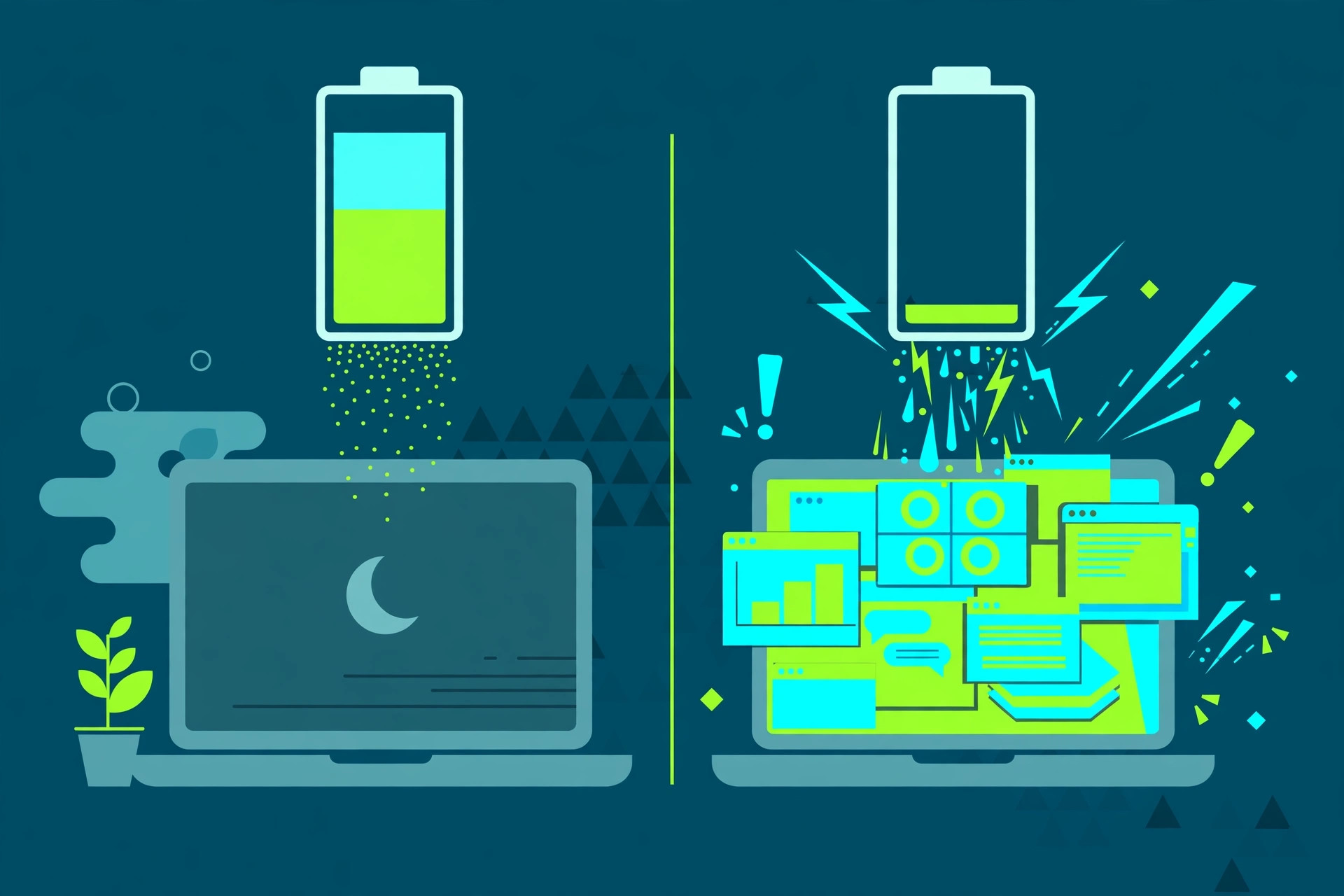
Manufacturers measure battery life with light, standardised work: video playback at modest brightness, or gentle browsing loops. Your day is heavier and spikier. Video calls light the camera, microphone, encoder and network together. A browser with forty tabs runs scripts in the background. Cloud sync, antivirus scans and updates pick their own moments. The battery calculator here divides capacity by average draw, so the whole game is knowing your average: light office work on a modern laptop draws 8 to 15 watts, calls and heavy browsing 20 to 30, gaming or rendering 45 watts and up. Estimate with the draw that matches the day you are planning for, not the brochure's day.
The screen, the radios and the heat
The display is usually the largest single consumer after the processor, and brightness is its throttle: full brightness can add several watts over a dim indoor setting. Radios cost more when signals are weak, because the device shouts to be heard; a phone or laptop on a distant Wi-Fi or mobile signal drains visibly faster. Heat is the silent multiplier, since a hot battery is an inefficient battery, and a hot processor throttles and stays busy longer. Software matters too: one misbehaving app keeping the processor awake can halve a day. Every operating system ships a battery page that names the hungry apps; it is the first place to look when life suddenly shortens.
Age and the honest final figure
Batteries are consumables. A lithium battery at 500 full cycles typically holds about 80 percent of its original capacity, and calendar age alone costs a few percent a year. So the correct estimate for an older device multiplies three honest numbers: today's capacity, not the box figure, divided by today's average draw, minus a margin for the inefficiency of conversion and the reserve the system keeps. Planning with a 15 percent margin turns battery anxiety into arithmetic. If the result still falls short of your day, the levers in order of effect are: lower brightness, kill the hungry app, use Wi-Fi instead of mobile data, and only then carry a power bank, sized in watt hours like everything else. There is a quieter factor in the background: temperature. Cold batteries deliver less and hot batteries age faster, which is why a phone dies at 20 percent on a freezing day and revives indoors. None of this makes estimation futile; it makes estimation a range rather than a point. Run the calculator with your best draw figure, then hold the answer loosely by about a fifth in either direction. A plan that survives the pessimistic end of the range is a plan you can trust.